

Thousands of visitors gathered in Prespa last week for the 2nd TRIETHNÉS FESTIVAL, under the artistic direction of Yorgos Ziavras, co-produced with the Municipality of Prespa, and held under the auspices of and with funding from the Hellenic Ministry of Culture.
Once again this year, audiences and artists came together as one in Prespa. From the morning of Thursday, 27 August, through the evening of Sunday, 30 August, visitors had the opportunity to experience an exceptionally rich programme across a wide range of landmarks and locations around the lakes, several of which remain little known even to residents of the region.
All Festival events attracted impressive attendance, with venues filled to capacity and audiences responding enthusiastically, rewarding the artists with prolonged applause.
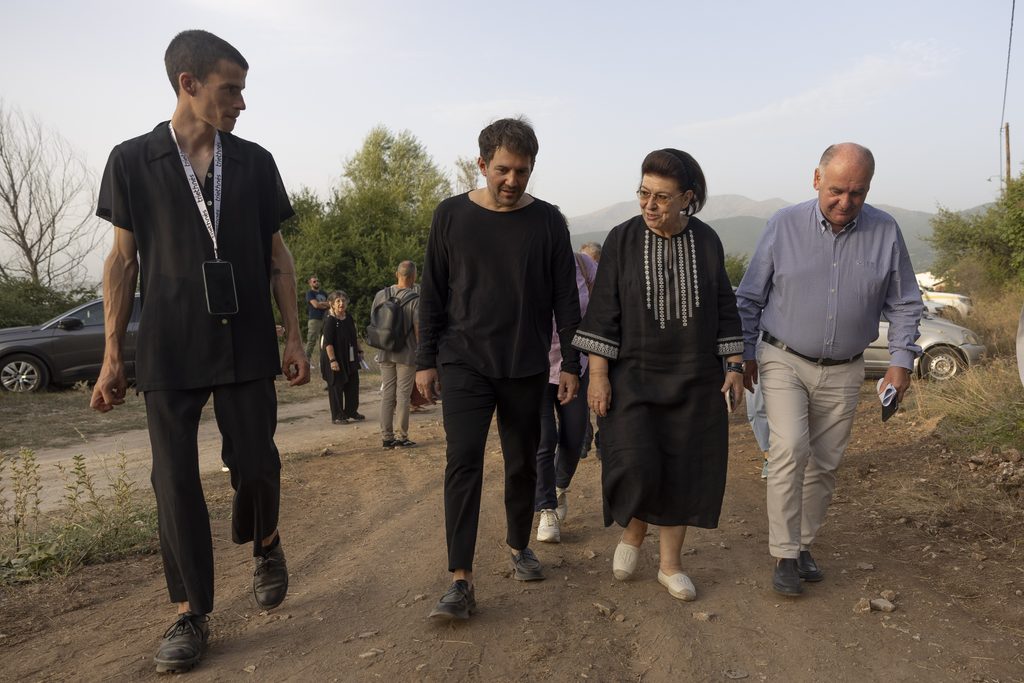
The Festival was also honoured by the presence of Minister of Culture Lina Mendoni, who attended the concert on 29 August at the Mikrolimni Quarry. Also in attendance were Deputy Minister of Tourism Anna Karamanli; Governor of Western Macedonia Giorgos Amanatidis; Deputy Regional Governor for Tourism Polytimi Farmaki; Consul General of Germany in Thessaloniki Monika Frank; Member of Parliament for Florina Stavros Papasotiriou; Mayor of Prespa Giorgos Stergiou; and journalist and special adviser to the Minister, Anna Panagiotarea.
See highlights from this year’s Festival:
Thursday 27, August
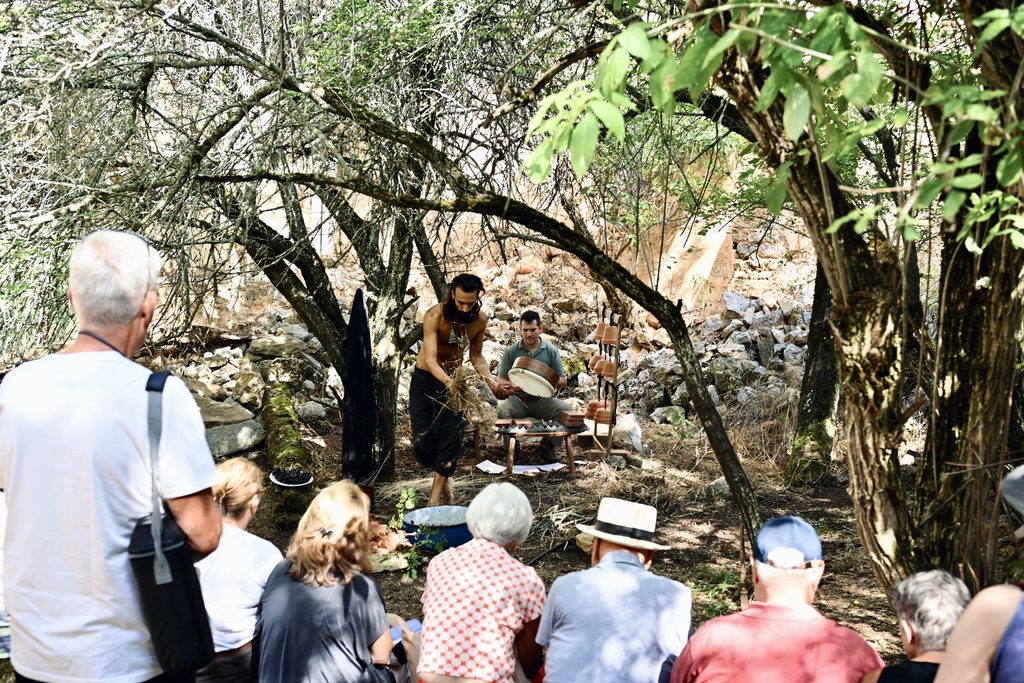
The Festival programme began on the morning of Thursday, 27 August, in a captivating setting along the Greek-Albanian border: the ruins of the Church of Agios Dimitrios, in Moschochori, a village that has effectively “disappeared” from the map, above Krystallopigi.
Percussion soloist Panagiotis Ziavras and physical performer Myrgon returned to the Festival with a new creative collaboration: a meditative ritual presented as part of NOMAD PRESPA, a new “festival within the festival.” Improvisations with percussion and objects drawn from the natural environment were brought together with Myrgon’s performance, in which he worked with clay, mud, earth and grasses collected from the mountains of Prespa.
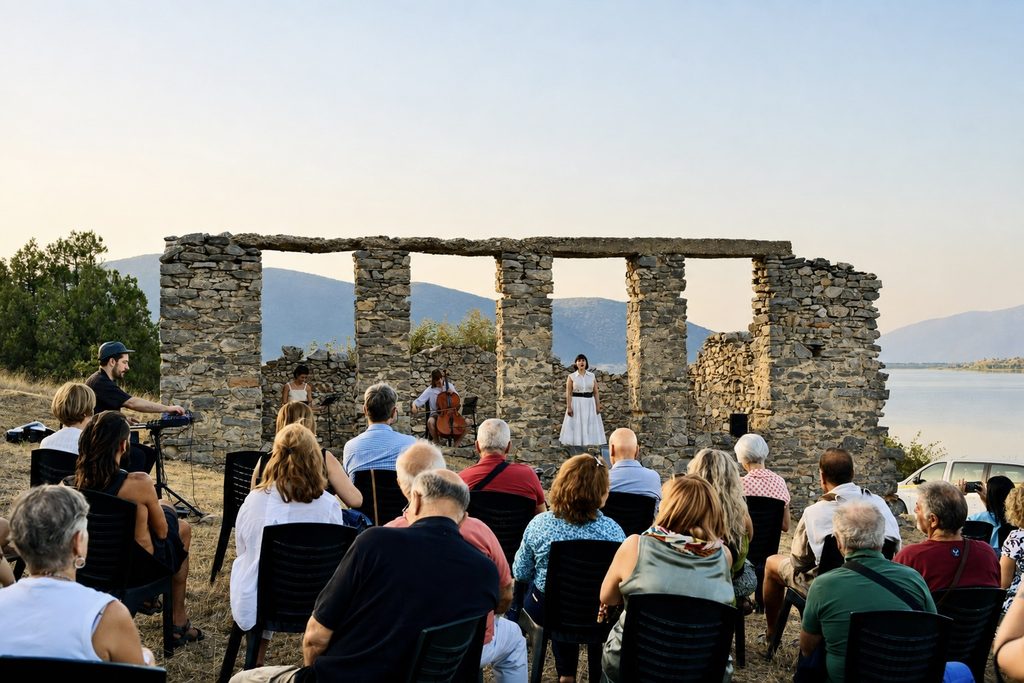
On Thursday afternoon, in Daseri, another village that has effectively “disappeared” from the map, where nature and the mountains have reclaimed almost every trace of human presence, four exceptional soloists wove together a musical palimpsest of lullabies from Prespa in Greek, Albanian and Slavic Macedonian.
Inside the only building still standing, an old school that was never used, traditional and contemporary songs and lullabies resonated through the empty windows. The two female voices of Marianna Nomikou and Natasa Tsakiridou intertwined intricately with the cello of German musician Rebekka Stephan and the live electronics of Chilean composer Pablo Garreton.
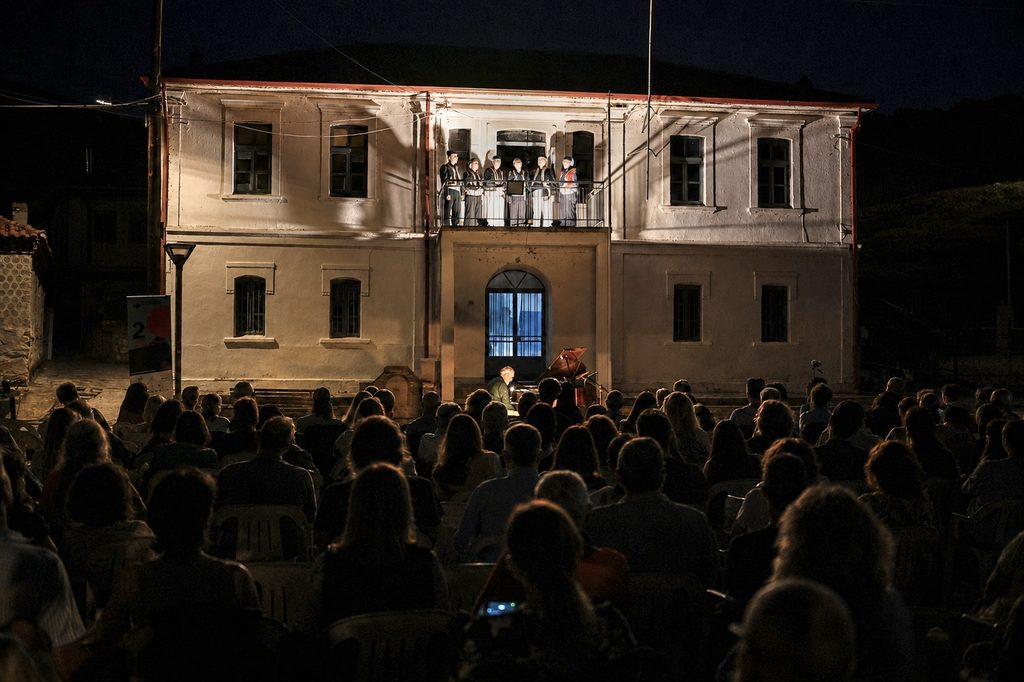
The Festival’s first day came to a close in the packed village square of Psarades. Brazilian pianist Paulo Álvares captivated the audience with an improvisational dialogue built around Vlach polyphonic melodies sung by the ensemble “Fraserotes,” who travelled from Drenovë, Albania, especially for the collaboration.
The concert was recorded by the Third Programme of Hellenic Radio, as part of the Festival’s collaboration with ERT.
Friday 28, August
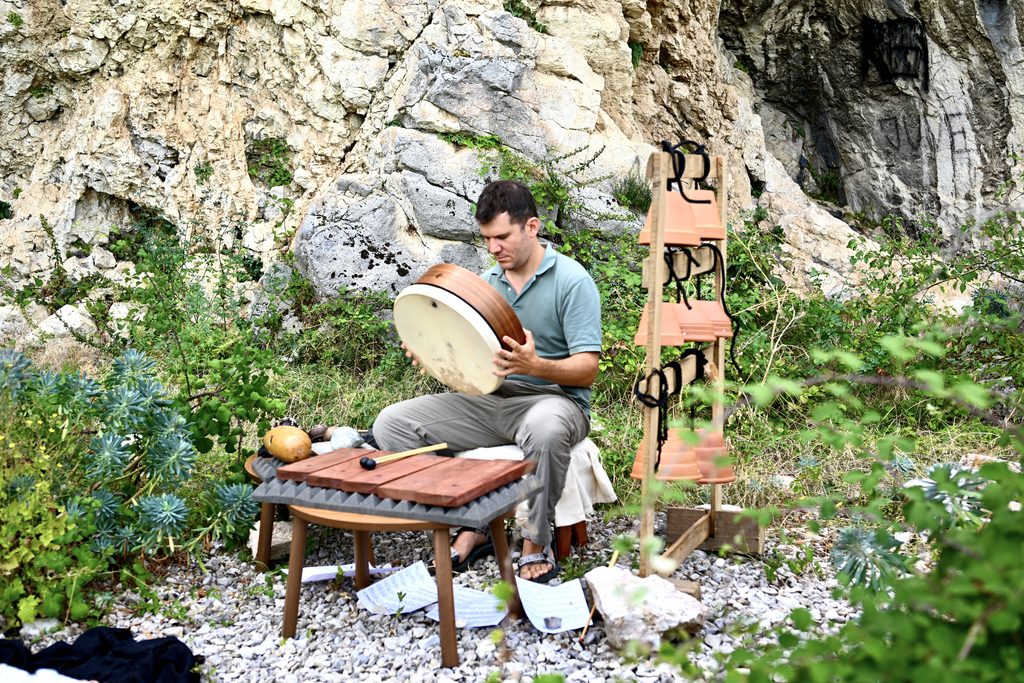
On the morning of Friday, 28 August, the Festival crossed the border into Pustec, Albania, a village on the shores of Great Prespa with which the Municipality of Prespa collaborates on important international and cross-border projects.
At Zaroshkë Beach, beside the lake, NOMAD PRESPA 2 was presented. The nomadic artistic journey of Panagiotis Ziavras and Myrgon continued this time on the Albanian side of Prespa, with a new version of their percussion-and-body performance, adapted to the different landscape and natural environment.
It offered a moment of calm within the Festival’s dense programme, while further highlighting the cross-border character of the event. Among those in attendance were journalists from Greek media outlets, who were hosted in Prespa as part of a Festival press trip.
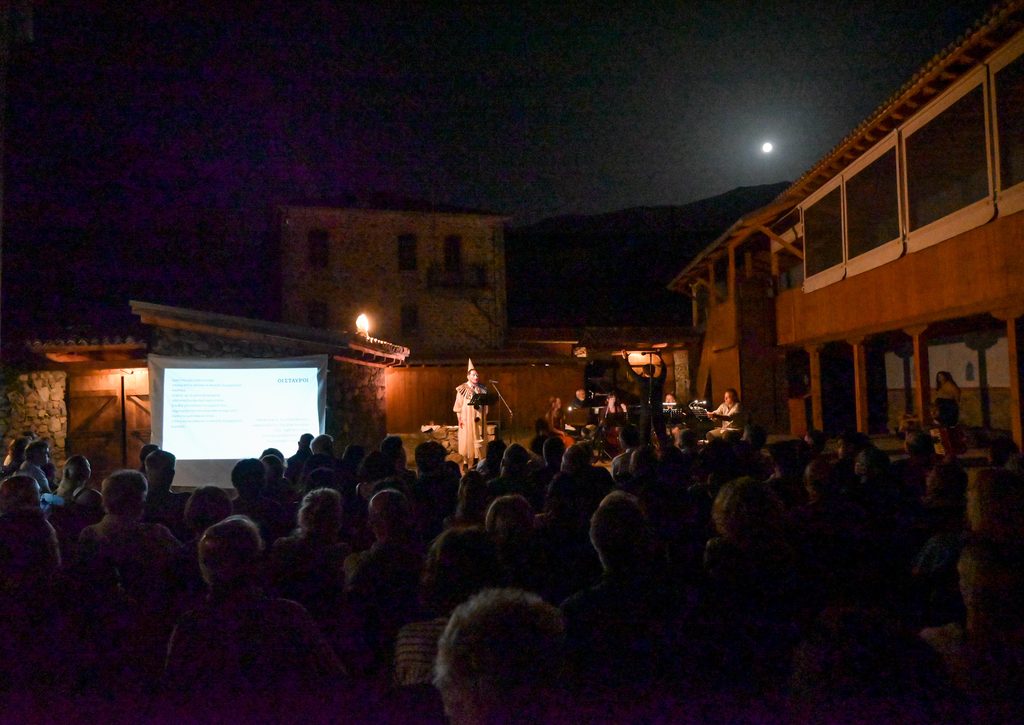
On Friday evening, beneath the August full moon, baritone Georgios Iatrou, in the role of Pierrot, captivated the audience that filled the Byzantine Collection in Agios Germanos.
Arnold Schoenberg’s monumental “Pierrot Lunaire” was performed with exceptional virtuosity by the internationally active baritone, together with an ensemble of distinguished soloists from around the world. Costumes by Ioanna Tsami brought a particular sensitivity to the production, while Yorgos Ziavras conducted with precision and attention to detail, bringing out the full range of colours in both the music and Pierrot’s story.
Songs of longing and carnival framed the performance, with the ensemble using not only their instruments but also improvised percussion and everyday objects — even cooking pots — to create a distinctive theatrical and sonic atmosphere.
The concert was recorded by the Third Programme of Hellenic Radio as part of the Festival’s collaboration with ERT.
Saturday 29, August
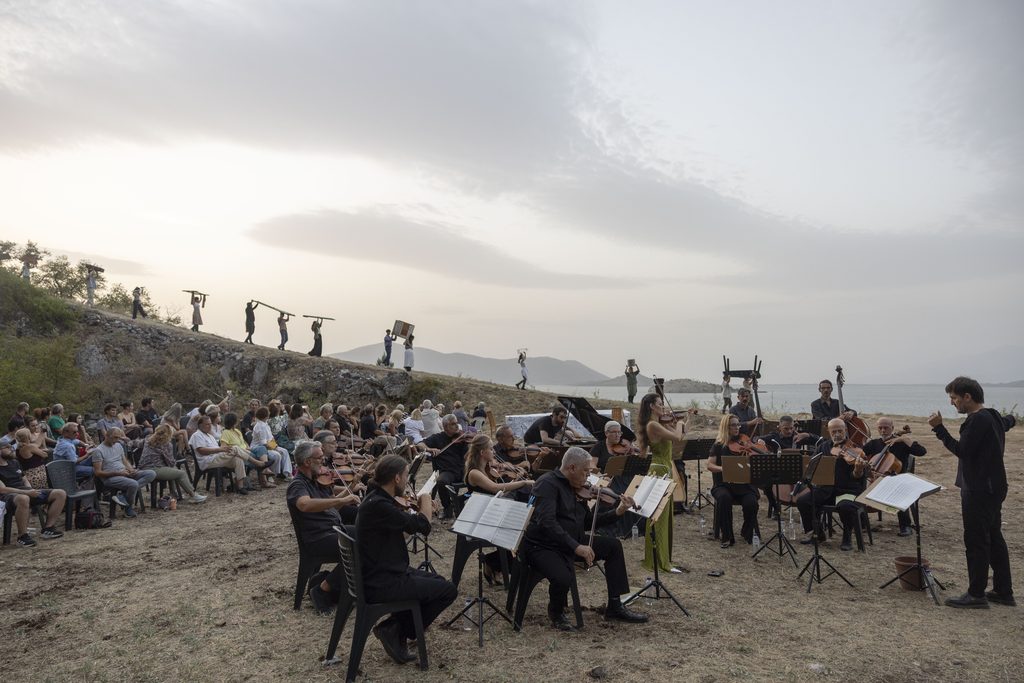
The programme continued on the afternoon of Saturday, 29 August at the Mikrolimni Quarry, where emerging director Panos Zygouros created a physical theatre performance inspired by the four seasons of Prespa, the lives of its residents, and the cycle of bean cultivation and harvesting.
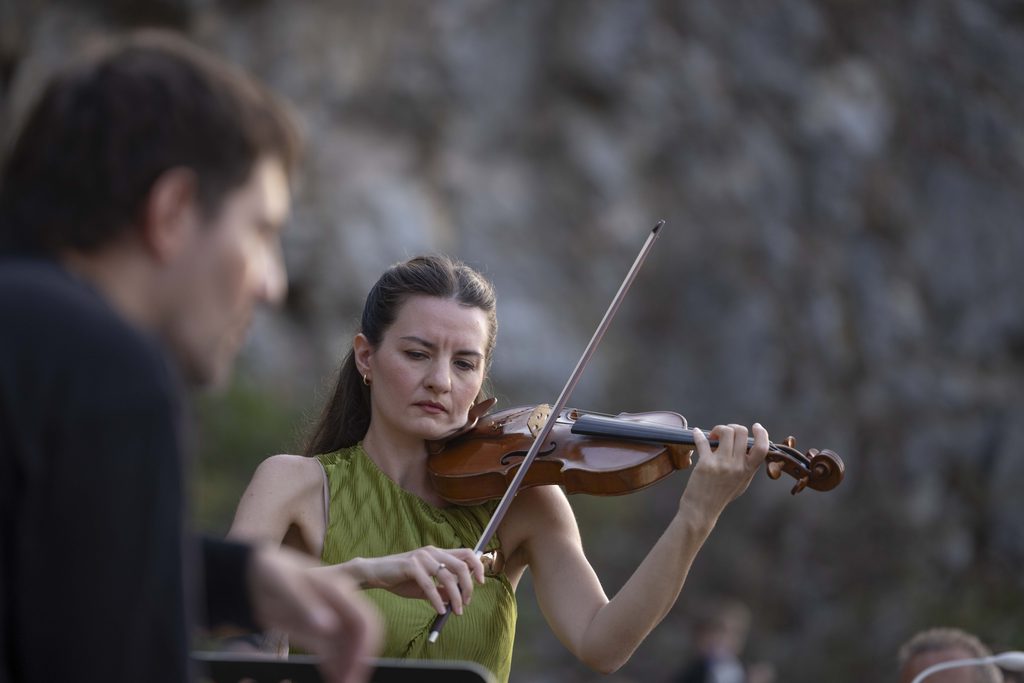
The Athens Municipality Symphony Orchestra, joined by Katerina Chatzinikolaou, concertmaster of the Athens State Orchestra, performed Vivaldi’s The Four Seasons in the minimalist reworking by British composer Max Richter, under the musical direction of the Festival’s Artistic Director, Yorgos Ziavras. Actors from Thiasos Antama also took part on stage, alongside ten Prespa residents of different ages.
The audience, which packed the Quarry to capacity, rose to its feet to acclaim the performers with prolonged applause, marking one of the most moving moments of this year’s Festival.
Sunday 30, August
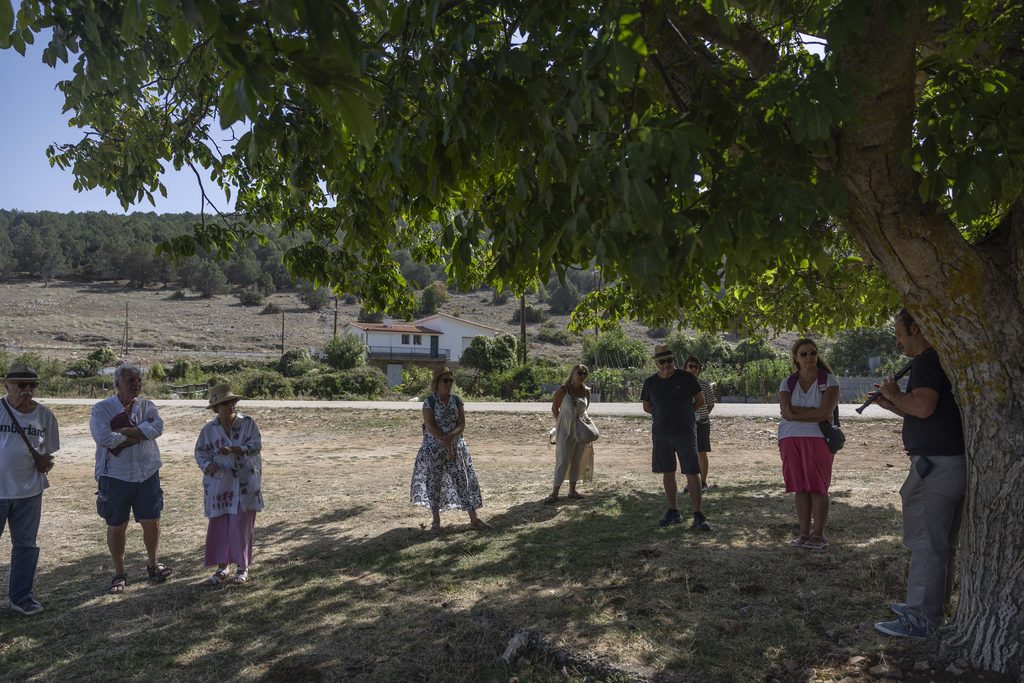
The day began with a mindful walk from the village of Psarades towards the Roti viewpoint, overlooking the waters where the borders of the three countries meet. Flutist Zacharias Tarpagkos walked alongside residents of Prespa and festival visitors, guiding them through improvised flute passages on a contemplative journey centred on friendship, connection and shared experience.
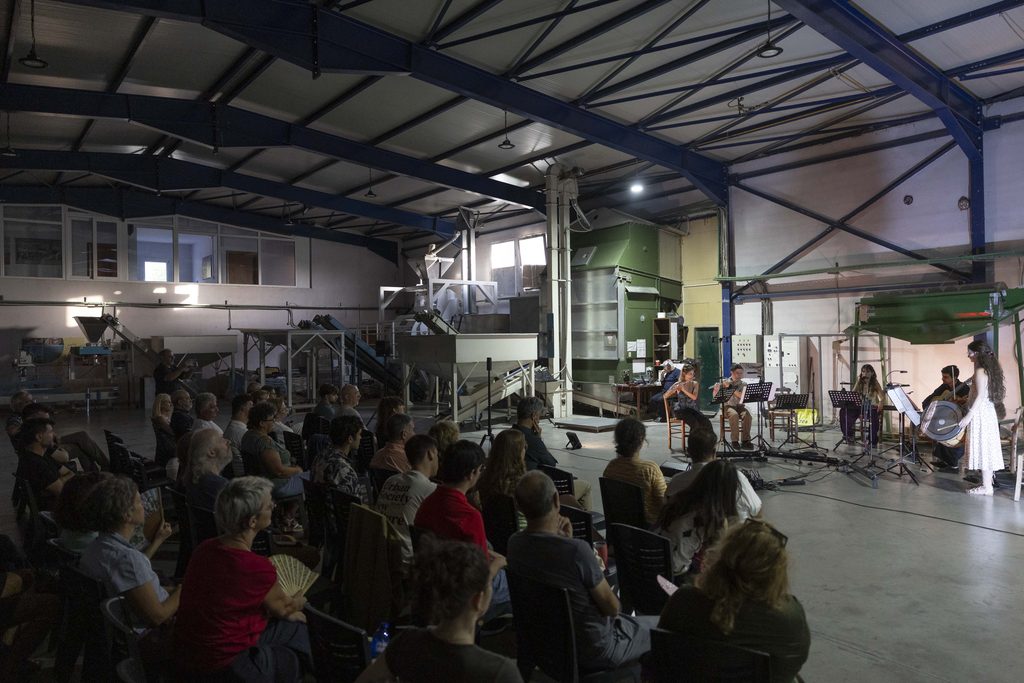
Later in the day the Festival took root early in the day at the bean packaging facility of the PELEKANOS Agricultural Cooperative in Laimos. Later that afternoon, surrounded by sacks of beans and sorting machinery, participants in this year’s second PRESPENSIS Academy presented five new works commissioned by the Festival.
The Academy brought together university students and school pupils from the Department of Music Science and Art at the University of Macedonia, the School of Music Studies at Aristotle University of Thessaloniki, as well as the Music Schools of Kastoria, Ptolemaida and Amyntaio.
This year’s Academy was supported through a donation from the J. F. Costopoulos Foundation.
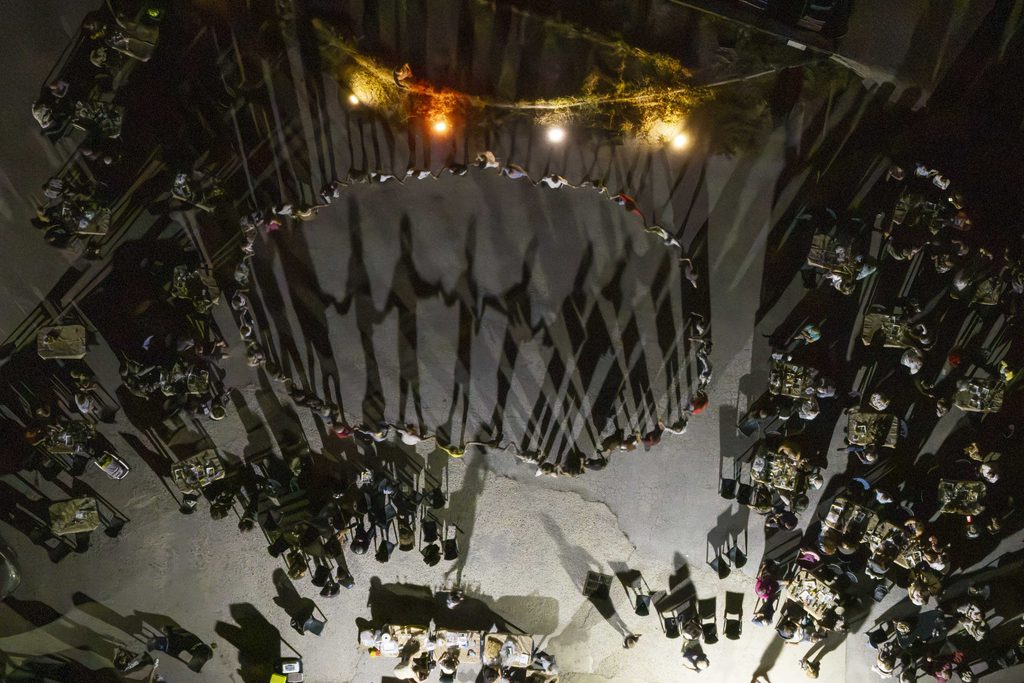
On Sunday evening, the Festival came to a close with a large traditional celebration featuring the local band “T’ Aidonia tis Florinas”, with Natasa Tsakiridou and Maria Dafka on vocals. The stage came alive as the audience danced well into the early hours of the morning.
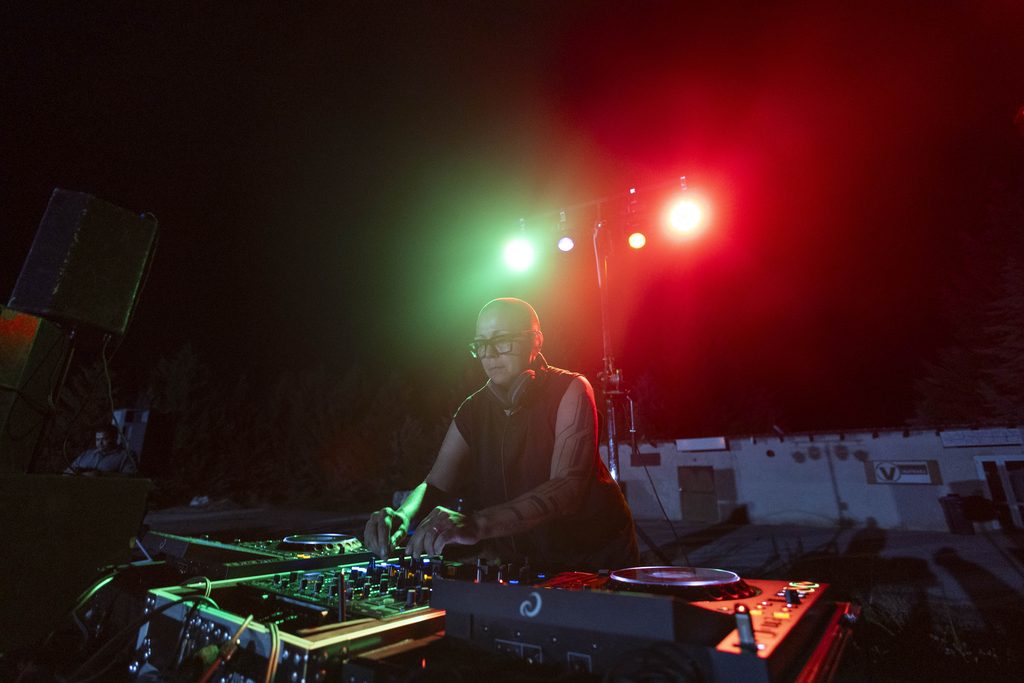
Later, DJ Fo took over the decks with Balkan beats and techno, keeping the crowd on its feet and the celebration going until dawn.
With its second edition, TRIETHNÉS FESTIVAL further established Prespa as a meeting point for contemporary artistic creation, local communities and cross-border cultural exchange. Across four days, music, performance and site-specific work unfolded in villages, abandoned buildings, landscapes and unexpected spaces around the lakes, creating encounters between artists, residents and visitors that extended far beyond the conventional concert setting.
At the heart of the Festival remains a simple but ambitious idea: to create contemporary artistic experiences that are inseparable from the place in which they happen. Drawing on the landscape, memory, traditions and communities of Prespa, while bringing together artists from Greece and abroad, TRIETHNÉS continues to develop as a festival rooted locally but open to the wider world.
The Festival will return in 2027, continuing its work across the Prespa region with new commissions, collaborations and artistic projects.
Latest News


